
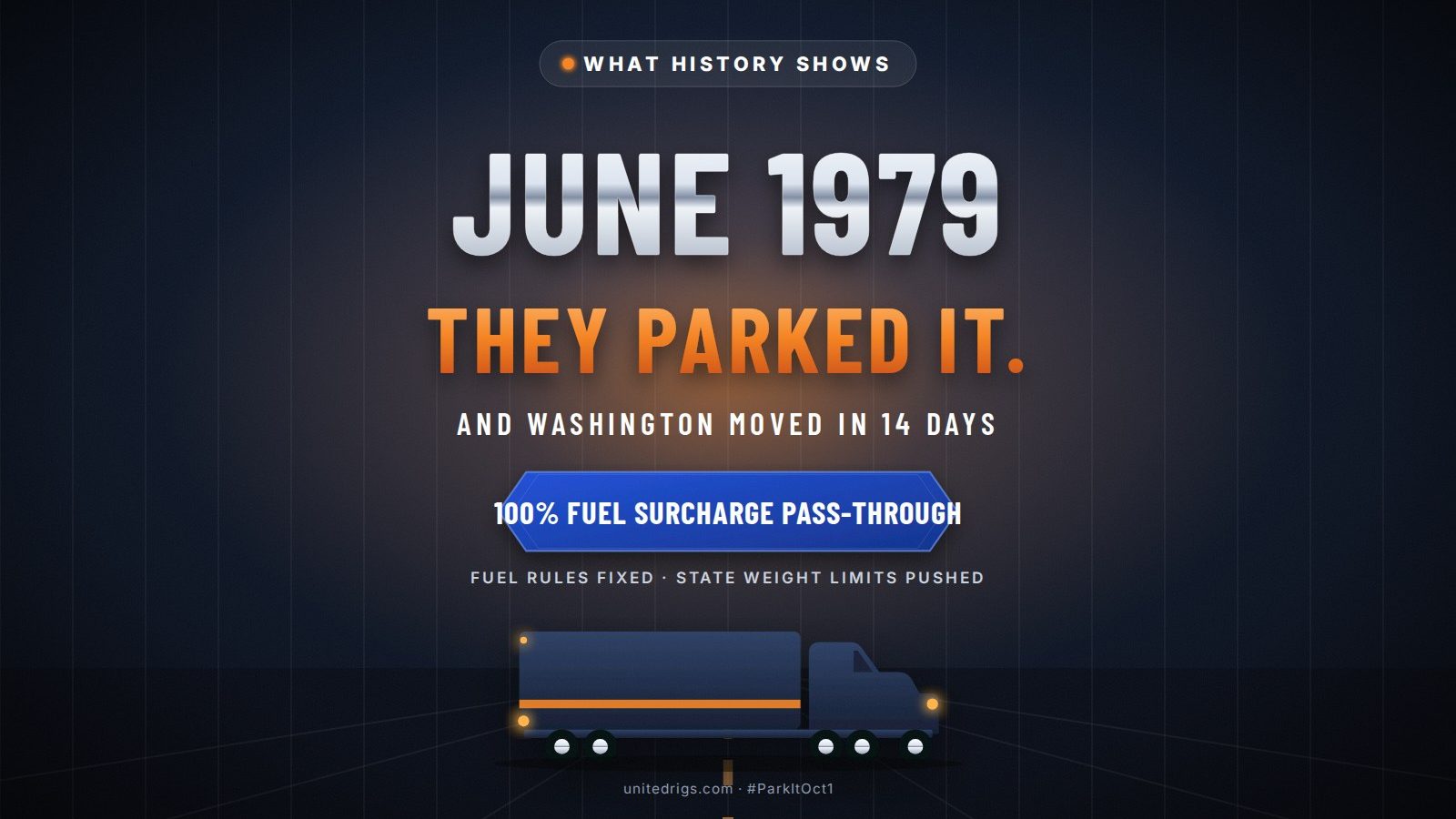
We’re not the first drivers to shut it down. In June 1979, independent truckers parked their rigs — and inside of two weeks the White House moved.
Every driver talking about October 1 should know this story. Not the legend. What actually happened, and what it actually won.
The summer the wheels stopped
Five years after the fuel-crisis shutdowns of 1973 and 1974, it happened again. OPEC cut back, Iranian production fell off, and diesel climbed hard through the first half of 1979. Worse than the price: in a lot of places drivers couldn’t get fuel at any price. Owner-operators with a truck payment were watching every mile get harder to afford.
So in June, independents started shutting down. Some just parked. Others blockaded truck stops, fuel terminals and highways. Word moved on the CB from state to state — their version of our group chats.
Then the country started feeling it, exactly the way drivers said it would. Refrigerated freight came off the road. Meat shipments stalled. Fuel deliveries dried up in some areas. In New England, truckers shut down one of the region’s biggest produce markets. Governors called out police and the National Guard to escort fuel and produce through.
What it won — in fourteen days
On June 22, 1979, the White House put out a statement on the strikes. The administration condemned the violence flat out — and in the same breath admitted the independents had legitimate grievances. Then it acted:
- Fuel rules were changed. The administration suspended the allocation rule that had been steering diesel away from truckers, to get fuel flowing to rigs again.
- A 100% fuel surcharge pass-through. The Interstate Commerce Commission put in an automatic pass-through so rising fuel costs went straight into freight rates, adjusted weekly, instead of coming out of the driver’s pocket.
- Pressure on the states over truck rules. The White House pushed states to rethink the weight limits that made every state line a new problem.
- Refinery audits, more imports, and a plan to simplify multi-state licensing.
By early July most drivers were heading back to work. They didn’t get everything. They got more in two weeks of parked trucks than years of polite letters had ever produced.
The part nobody likes to repeat
It also turned ugly. Trucks that kept running were shot at, stoned and vandalized. A driver was killed. Those stories became the headline, and they handed every politician an excuse to talk about lawlessness instead of $1.29 diesel and empty fuel islands.
Read the June 22 statement and you can see it in black and white: the first line is about violence, and only after that comes the part about legitimate concerns. The drivers still won real changes — but they paid for that violence in public support, and they handed the other side the story.
What 1979 tells us about October 1
- Parking works. It is the only thing drivers have ever done that made Washington move in days instead of years. The freight doesn’t move without us, and everybody remembers that the week the shelves get thin.
- Demands are what turn a shutdown into a result. 1979 produced a fuel surcharge rule and a fix to fuel allocation because there were specific asks on the table. That’s why our list is published where anyone can read it.
- The violence is what cost them. Not the parking. Not the demands. The rocks and the rifles. That’s why the rule for October 1 is simple: park legally, never block a road, and nothing gets said or thrown at a driver who keeps rolling. Every one of us is a camera crew now — the footage from this one is going to be ours, not theirs.
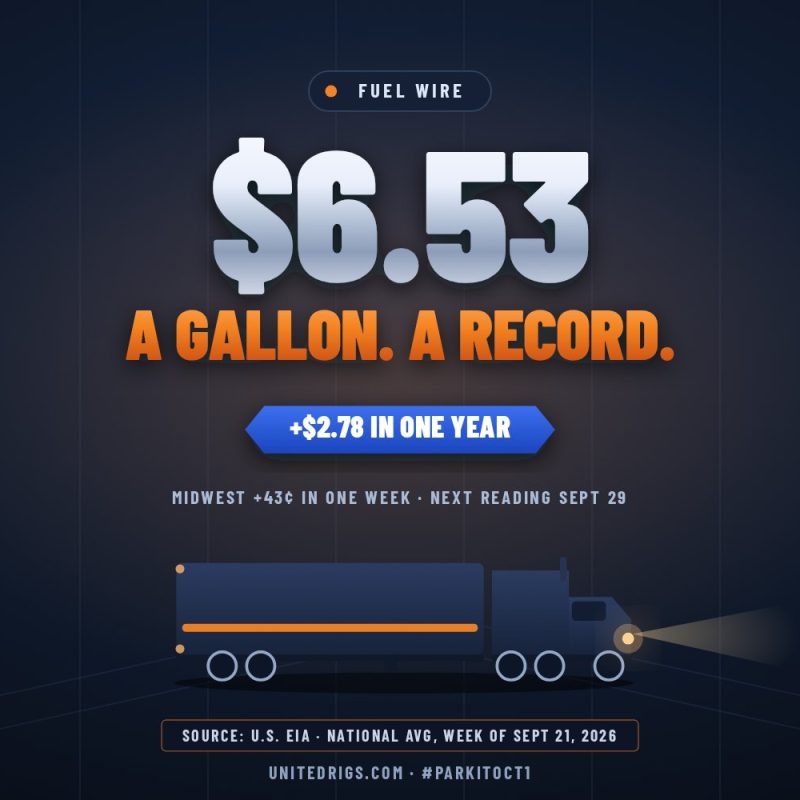
Forty-seven years later, we’re back at the same fuel island. Diesel is at a record. Rates are on the floor. Detention is still free for the docks. And once again nobody at a table in Washington speaks for the driver.
They proved it in 1979: when the trucks stop moving, everything behind them stops too. We park starting October 1.
Park it. Drivers, united.
Sources: White House statement on the independent truckers’ strikes, June 22, 1979 (American Presidency Project) · The Washington Post, June 22, 1979 · “Keep on Truckin’,” Democracy Journal.